
El Mirage Directory Volumes
The Arizona Memory Project El Mirage holdings identify twelve digitized volumes that name or tag the city. They are not one unbroken publication. They are a useful set of alphabetical, telephone, and address-first sources from a short but important era. The titles also show how publishers placed El Mirage within the West Valley. A researcher who searches only for a book titled solely with the city name will miss the collection.
| Collection | Years | Where Held | Access |
|---|---|---|---|
| Official Glendale-Peoria Directory, including Rurals, El Mirage and Marinette | 1954 | Arizona Memory Project | Digitized online |
| Mullin-Kille Glendale, Arizona ConSurvey City Directory | 1957, 1959, 1961, 1963 | Arizona Memory Project | Digitized online |
| January Mountain States Phoenix Telephone Directory | 1959, 1960, 1961, 1962, 1963 | Arizona Memory Project | Digitized online |
| Cole's Greater Phoenix Criss Cross or Cross Reference Directory | 1962, 1963 | Arizona Memory Project | Digitized, address-first |
These four lines account for all twelve El Mirage-linked volumes: one 1954 directory, four Mullin-Kille editions, five annual telephone books, and two Cole's cross-reference books. A year missing from the table is a gap in this confirmed digital set, not proof that nobody published another book. No verified first or last printed El Mirage directory year was found beyond the exact holdings above. Library catalogs and archive staff are the right fallback before making a broader claim.
The captured El Mirage directory holdings record shows where the confirmed set begins online.
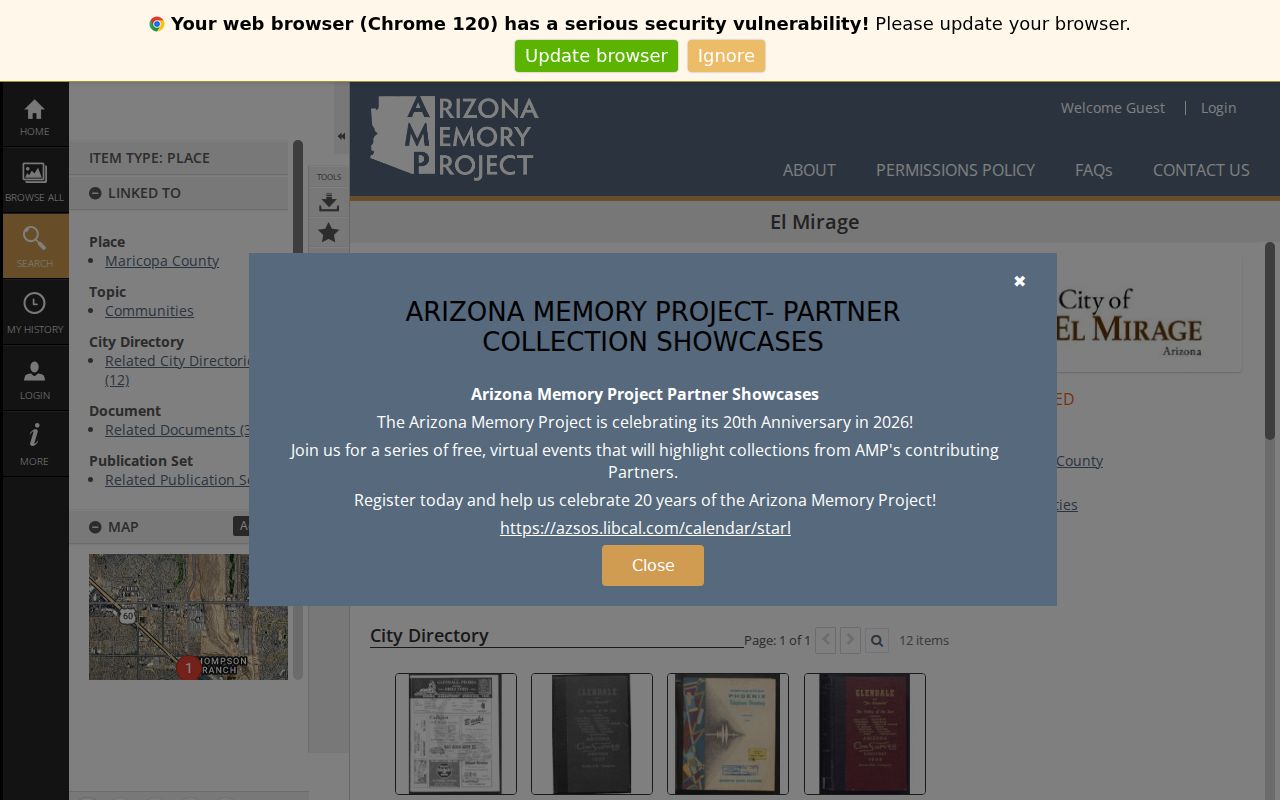
The catalog record is the sound source for a volume title and year, while the scanned title, key, and entry pages supply the evidence needed for a household citation.
El Mirage Directory Geography
El Mirage incorporated in 1951, but Maricopa County existed from 1871. Records made before incorporation usually sit under county, federal, township-and-range, or neighboring-community geography. The 1954 title is telling: it joins Glendale, Peoria, rural areas, El Mirage, and Marinette. Mullin-Kille then treated the city as part of a western-valley directory market. Mountain States used a Phoenix telephone-book frame, and Cole's used Greater Phoenix.
Search wide place terms. Try Phoenix, Maricopa County, Glendale, Peoria, Dysart, a subdivision name, and the exact street as it was known in the target year. El Mirage lies near Sun City, Youngtown, Surprise, and Luke Air Force Base, so a metropolitan index or base-related source can catch a name that a narrow city query misses. Compound and hyphenated surnames also deserve several forms: exact spelling, reversed order, each surname part, and a spouse or co-owner. Each variation is a search method, not a claim about identity.
Note: A broad metropolitan title can contain precise El Mirage evidence even when the city does not lead the cover.
Decode El Mirage Directory Entries
Printed lines compress several facts into a small space. An inspected Phoenix metropolitan sample reads “Hal P (Alice) slsmn h Dreamy Draw rt Phoenix.” It is a format example, not an El Mirage resident. The line separates a name, spouse in parentheses, shortened occupation, a residence marker, and a route or address. A city directory entry can suggest presence at a place in the publication period, but it does not prove legal title or a full household.
| Name | The indexed person, often followed by initials and a spouse in parentheses. |
|---|---|
| Status | A widow or head-of-household note may appear where the publisher collected it. |
| Occupation | A shortened trade or role; the printed key controls its meaning. |
| Residence | A marker such as “h” followed by a street, route, or local address. |
| Ownership mark | Some editions distinguish an owner from another occupancy status, but the volume's own symbol key must confirm it. |
Always save more than the clipped line. Record the full title, publisher, edition, call or OCLC number when supplied, image page, printed page, and scan source. Photograph or download the title and abbreviation pages with the entry. The 1942 Phoenix directory metadata offers a model: it names Arizona Directory Co., gives a call number and OCLC identifier, dates the digitization, and states the source that digitized it.
- Criss-cross directory
- An address-first book arranged by street and house number, leading from a place to the listed occupant or telephone.
- Householder index
- A name list focused on the person recorded as the main householder, not a full census of everyone at the address.
- Abbreviation key
- The publisher's legend for marks and shortened words. It should be read before interpreting an entry.
Reverse El Mirage Directory Searches
Cole's 1962 and 1963 books are the strongest address-first bridge in the confirmed run. Their criss-cross arrangement reverses the usual search. Start with the street and number, then read the listed occupant and telephone. Check the same name in a Mullin-Kille alphabetical volume for spouse, occupation, or status notes. A telephone volume may fill an annual gap between the less frequent alphabetical editions.
Address continuity must be tested first. Rapid West Valley growth brought subdivisions, annexations, and parcel changes. A modern street label may not match the wording used in an older book. Use the county deed and plat trail to tie a present parcel to its former lot, block, subdivision, or legal description. The modern address-keyed method belongs in the El Mirage street directory; the historical directory then supplies the printed occupant layer.
Best bridge. Establish the address through the legal record, use Cole's street order, then confirm the name in an alphabetical edition.
El Mirage Library Directory Help
The El Mirage Library is at 13513 N. El Mirage Road, El Mirage, AZ 85335, and its phone is 602-652-3000. Posted hours are 9 a.m. to 5 p.m. Monday through Wednesday, 9 a.m. to 7 p.m. Thursday, and 9 a.m. to 5 p.m. Friday and Saturday. It is closed Sunday. The branch provides computers, printing, Wi-Fi, study space, and access to the Maricopa County Library District network.
Ask staff or catalog staff to search “Phoenix city directory,” “Maricopa County directory,” “telephone directory,” “criss-cross,” “El Mirage,” “Dysart,” and subdivision names. Also ask whether a reference-only item is held at another branch and can be used there. The branch page does not publish a dedicated El Mirage genealogy room, local directory shelf, obituary index, or newspaper microfilm run. Staff help and public computers are confirmed; a specific local volume must be confirmed in the catalog.
The official El Mirage Library branch page supplies current access details for a research visit.
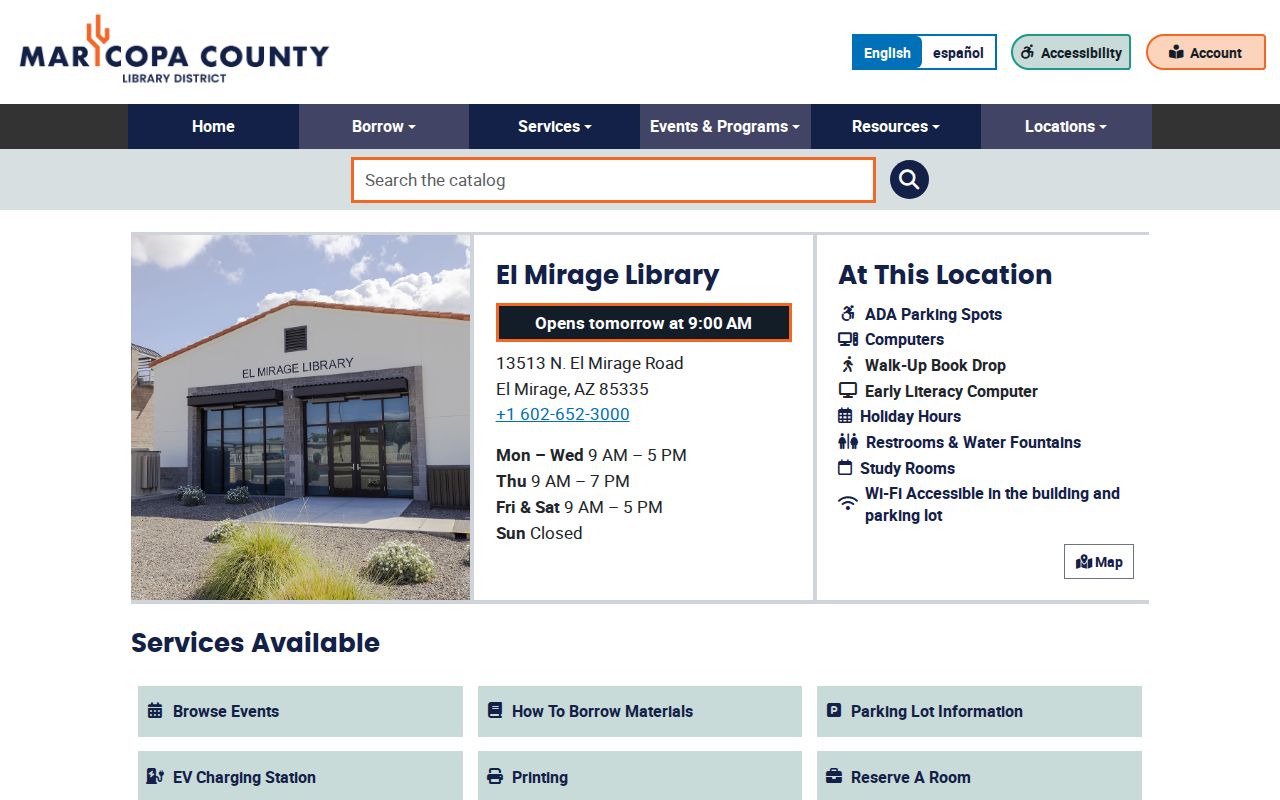
The branch is the practical local workstation, while the digitized directory images themselves are kept by Arizona Memory Project.
A Fire Station Becomes Library
El Mirage Library opened in 2003 and moved in July 2022 into a renovated former fire station near El Mirage and Thunderbird roads. That change gave local researchers a memorable civic link between an older public building and modern access to county library tools. Official sources disagree on its size: the branch page says 5,754 square feet, while a 2022 joint release described 7,435 square feet. Both figures should stay tied to their sources rather than be silently merged.
The building story is useful, but it does not turn the branch into a claimed archive. For government series, maps, photographs, oral histories, newspapers, or institutional papers, contact the Arizona State Library, Archives and Public Records. For the digitized city-directory shelf, use Arizona Memory Project. Keeping each institution's role clear prevents a catalog lead from becoming an unsupported claim that a book is physically held in El Mirage.
El Mirage Directory Timeline
The confirmed sequence covers several kinds of evidence rather than one publisher's continuous run. It should be read as a timeline of changing access points.
| Year | Directory development |
|---|---|
| 1954 | El Mirage appears in the Glendale-Peoria directory with rural places and Marinette. |
| 1957 | The first confirmed Mullin-Kille ConSurvey volume in the El Mirage set appears. |
| 1959 | Mullin-Kille and Mountain States give two different directory views in the same year. |
| 1960 | The annual Mountain States telephone run fills a gap between alphabetical editions. |
| 1962 | Cole's Greater Phoenix cross-reference adds an address-first route. |
| 1963 | Mullin-Kille, Mountain States, and Cole's all appear in the confirmed digital holdings. |
Arizona Memory Project's broader City Directories collection spans 1881 through 1989 and includes nearly 400 volumes. Its search guidance recommends Advanced Search, the City Directories collection filter, optional dates, and Exact Phrase Match. That wider shelf can supply metropolitan context, though a statewide span does not mean El Mirage appears in every year.
Trace El Mirage Families by Directory
City directories work best as dated observations. They become stronger when paired with a census, deed, probate file, obituary, or newspaper notice. The National Archives census program provides public population schedules through 1950 under the 72-year rule. The 1960 census is due to open in 2032, so it cannot yet fill the same role for the 1959 through 1963 directory cluster.
The National Archives research page below explains the federal census channel used to test directory clues.
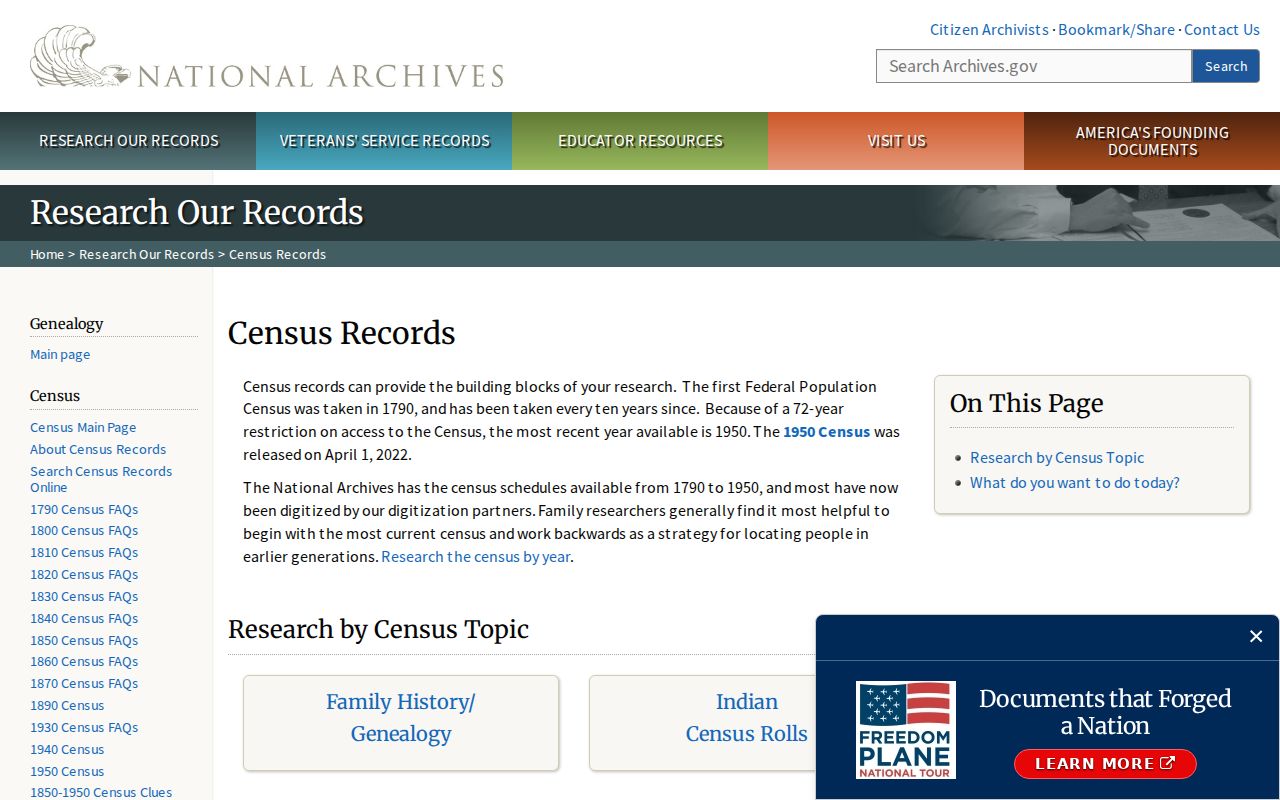
A census household can add relationships and ages that a city directory line was never meant to provide.
- Fix the street spelling and number for the target year with a deed, plat, census, or known document.
- Read the alphabetical entry and any street guide. Save the title, publisher, key, and page with the line.
- Move one available edition backward and forward. Note every address, spouse, occupation, and name-form change.
- Use the public 1950 census for an earlier household check, then compare deeds, probate, newspapers, and permits.
- Treat a missing entry as a question. Test a move, death, unlisted telephone, missed canvass, boundary label, or name variation.
Historical newspapers can help test a move or family event. Arizona Memory Project's research guidance reports newspapers from 1859 through 1989 across more than 120 titles and all fifteen counties. FamilySearch can also be searched by the place hierarchy United States, Arizona, Maricopa and then by record type. Some images may require a FamilySearch center or affiliate library, so cite catalog metadata before stating that a record is available.
Note: A directory records what its publisher gathered, while a deed, census, and vital record answer different questions.